
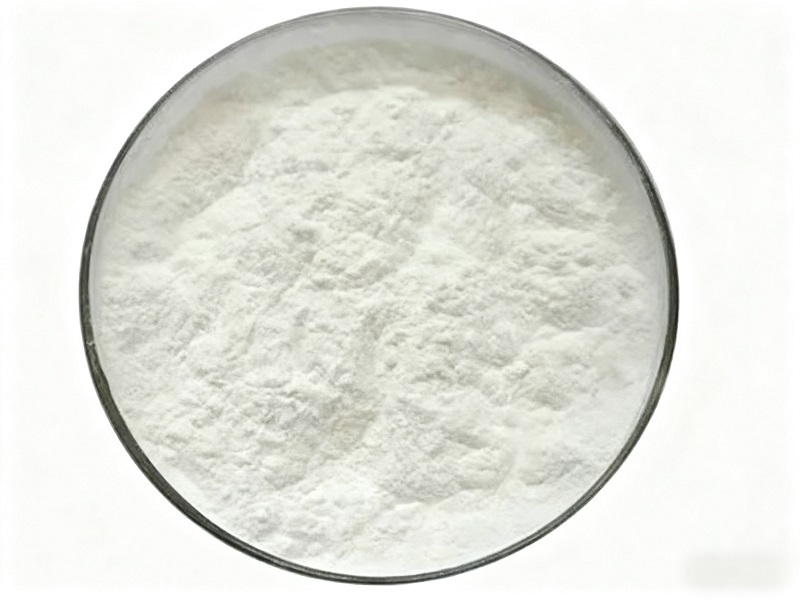
Procainamide hydrochloride
Antiarrhythmic drugs used to treat ventricular arrhythmias.
Overview
Procainamide hydrochloride is a potent Class Ⅰa antiarrhythmic agent, which has the effects of blocking sodium channels on myocardial cell membranes, slowing conduction velocity, and prolonging the duration of myocardial action potential and effective refractory period. Procainamide hydrochloride can be used in the research of ventricular arrhythmias (such as ventricular premature beats, ventricular tachycardia), supraventricular arrhythmias (such as atrial fibrillation, atrial flutter) and other arrhythmia-related diseases.
Synonyms: Procainamide HCl; Pronestyl; Procapan; Procanbid; Promide; Amisalin; Amidoprocain; Timtec-bb sbb001067; Promide hydrochloride; Procainamide HCl USP; Biocoryl; Procainamida; Procainamidum; Biocoryl
EINECS: 210-381-7
Product Categories: Amides; Carbonyl C chemical compounds; Bioactive small molecules; Chemical synthesis; Small molecule inhibitors; local anesthetics; API
Mol File: 614-39-1.mol
Physicochemical Properties
Melting point: 165-168°C
Storage temp: 2-8°C
Solubility: H2O: soluble1g/10 mL, clear, greenish-yellow
Form: Powder
Color: White to slightly yellow
Stability: Light Sensitive/Air Sensitive
MSDS Information
Experimental Data
1. Cell Experiment
H2O: ≥ 50 mg/mL (183.97 mM)
DMSO : 50 mg/mL (183.97 mM; Need ultrasonic; Hygroscopic DMSO has a significant impact on the solubility of product, please use newly opened DMSO)
"≥" means soluble, but saturation unknown.
Preparing Stock Solutions:
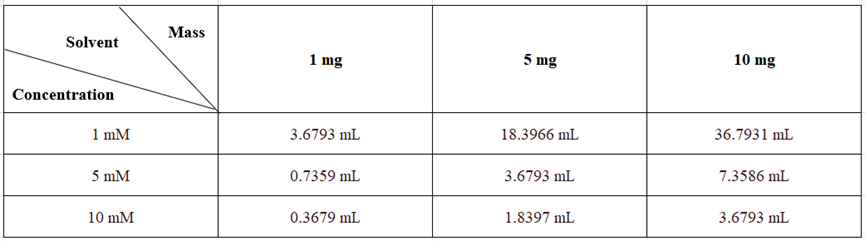
Please refer to the solubility information to select the appropriate solvent. Once prepared, please aliquot and store the solution to prevent product inactivation from repeated freeze-thaw cycles.
Storage method and period of stock solution: -80°C, 6 months; -20°C, 1 month (sealed storage, away from moisture and light). When stored at -80°C, please use it within 6 months. When stored at -20°C, please use it within 1 month.
Note: If you choose water as the stock solution, please dilute it to the working solution, then filter and sterilize it with a 0.22 μm filter before use.
2. Animal Experiment
Select the appropriate dissolution method based on your experimental animal and administration route.
For the following dissolution methods, please ensure to first prepare a clear stock solution using an In Vitro approach and then sequentially add co-solvents:
To ensure reliable experimental results, the clarified stock solution can be appropriately stored based on storage conditions. As for the working solution for in vivo experiments, it is recommended to prepare freshly and use it on the same day.
The percentages shown for the solvents indicate their volumetric ratio in the final prepared solution. If precipitation or phase separation occurs during preparation, heat and/or sonication can be used to aid dissolution.
Protocol 1
Add each solvent one by one: 10% DMSO, 40% PEG300, 5% Tween-80, 45% Saline
Solubility: ≥ 3.25 mg/mL (11.96 mM); Clear solution
This protocol yields a clear solution of ≥ 3.25 mg/mL (saturation unknown).
Taking 1 mL working solution as an example, add 100 μL DMSO stock solution (32.5 mg/mL) to 400 μL PEG300, and mix evenly; then add 50 μL Tween-80 and mix evenly; then add 450 μL Saline to adjust the volume to 1 mL.
Preparation of Saline: Dissolve 0.9 g sodium chloride in ddH₂O and dilute to 100 mL to obtain a clear Saline solution.
Protocol 2
Add each solvent one by one: 10% DMSO, 90% (20% SBE-β-CD in Saline)
Solubility: ≥ 3.25 mg/mL (11.96 mM); Clear solution
This protocol yields a clear solution of ≥ 3.25 mg/mL (saturation unknown).
Taking 1 mL working solution as an example, add 100 μL DMSO stock solution (32.5 mg/mL) to 900 μL 20% SBE-β-CD in Saline, and mix evenly.
Preparation of 20% SBE-β-CD in Saline (4°C, storage for one week): 2 g SBE-β-CD powder is dissolved in 10 mL Saline, completely dissolve until clear.
Protocol 3
Add each solvent one by one: 10% DMSO, 90% Corn Oil
Solubility: ≥ 3.25 mg/mL (11.96 mM); Clear solution
This protocol yields a clear solution of ≥ 3.25 mg/mL (saturation unknown). If the continuous dosing period exceeds half a month, please choose this protocol carefully.
Taking 1 mL working solution as an example, add 100 μL DMSO stock solution (32.5 mg/mL) to 900 μL Corn oil, and mix evenly.
For the following dissolution methods, please prepare the working solution directly. It is recommended to prepare fresh solutions and use them promptly within a short period of time.
The percentages shown for the solvents indicate their volumetric ratio in the final prepared solution. If precipitation or phase separation occurs during preparation, heat and/or sonication can be used to aid dissolution.
Protocol 1
Add each solvent one by one: PBS
Solubility: 120 mg/mL (441.52 mM); Clear solution; Need ultrasonic
Pharmacodynamics
Procainamide hydrochloride is an agent indicated for production of local or regional anesthesia and in the treatment of ventricular tachycardia occurring during cardiac manipulation, such as surgery or catheterization, or which may occur during acute myocardial infarction, digitalis toxicity, or other cardiac diseases. The mode of action of the antiarrhythmic effect of Procainamide appears to be similar to that of procaine and quinidine. Ventricular excitability is depressed and the stimulation threshold of the ventricle is increased during diastole. The sinoatrial node is, however, unaffected.
Mechanism Of Action
Procainamide hydrochloride is sodium channel blocker. It stabilizes the neuronal membrane by inhibiting the ionic fluxes required for the initiation and conduction of impulses thereby effecting local anesthetic action.
Similar Products
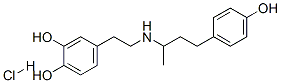
Dobutamine Hydrochloride
Therapy
: Cardiometabolic diseases
Target
: Adrenoceptors
CAS
: 49745-95-1
MF
: C18H24ClNO3
MW
: 337.84
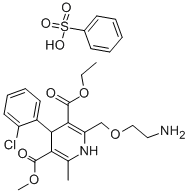
Amlodipine Besylate
Therapy
: Cardiometabolic diseases
Target
: VDCCs
CAS
: 111470-99-6
MF
: C26H31ClN2O8S
MW
: 567.05094
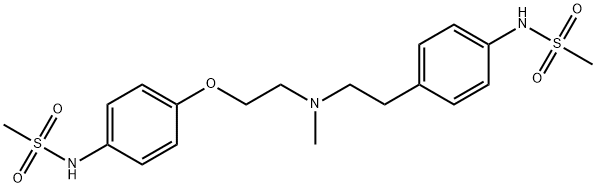
Dofetilide
Therapy
: Cardiometabolic diseases
Target
: Potassium channel;VGKCs
CAS
: 115256-11-6
MF
: C19H27N3O5S2
MW
: 441.56
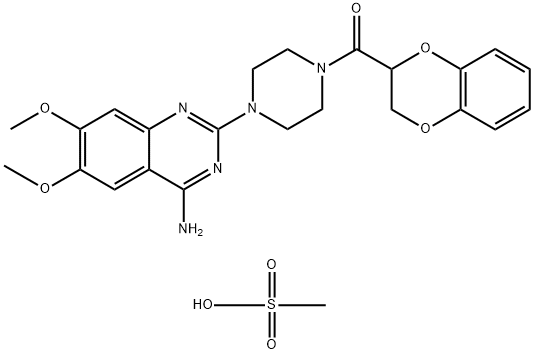
Doxazosin Mesylate
Therapy
: Cardiometabolic diseases
Target
: ADRA1
CAS
: 77883-43-3
MF
: C24H29N5O8S
MW
: 547.58