
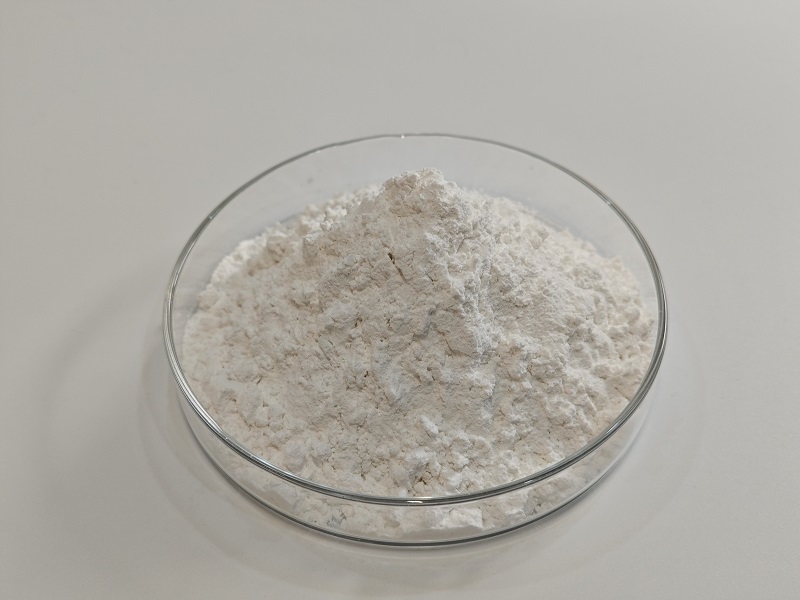
Mirdametinib
An oral MEK inhibitor, a kinase inhibitor. It is used for the treatment of neurofibromatosis type 1 in adult and pediatric patients, a genetic condition that causes skin changes and tumors in the nervous system.
Overview
Mirdametinib is a highly selective MEK1/2 inhibitor and an oral targeted therapy. It specifically inhibits MEK1/2 activity to modulate the aberrant MAPK signaling pathway. By targeting this critical pathway - which is dysregulated due to NF1 gene variants in neurofibromatosis type 1 (NF1) - Mirdametinib provides a mechanism-based treatment for NF1-associated nervous system tumors and cutaneous manifestations.
Synonyms: N-[(2R)-2,3-DIHYDROXYPROPOXY]-3,4-DIFLUORO-2-[(2-FLUORO-4-IODOPHENYL)AMINO]-BENZAMIDE;PD0325901; (R)-N-(2,3-dihydroxypropoxy)-3,4-difluoro-2-(2-fluoro-4-iodophenylamino)benzamide; PD-0235901; N-[(2R)-2,3-Dihydroxypropoxy]-3,4-diflChemicalbookuoro-2-[(2-fluoro-4-iodophenyl)aMino]be; PD325901; N-[(R)-2,3-Dihydroxy-propoxy]-3,4-difluoro-2-(2-fluoro-4-iodo-phenylaMino)-benzaMide; N-[(2R)-2,3-Dihydroxypropoxy]-3,4-difluoro-2-[(2-fluoro-4-iodophenyl)amino]benzamidePD0325901
EINECS: 687-152-7
Product Categories: Amides; Aniline Compounds; Antineoplastic Agents; Antineoplastic and Immunomodulating Agents; BCRP/ABCG2 Substrates; Benzene Derivatives; Kinase Inhibitor; Mitogen-activated protein kinase (MEK) inhibitors; P-glycoprotein substrates; Protein Kinase Inhibitors
Mol File: 391210-10-9.mol
Physicochemical Properties
Melting point: 112-114°C
Storage temp: 2-8°C
Solubility: DMSO: soluble 20mg/mL, clear
Form: Solid
Color: White to Off-white
Stability: Stable for 1 year from date of purchase as supplied. Solutions in DMSO or ethanol may be stored at -20° for up to 3 months.
MSDS Information
Experimental Data
1. Cell Experiment
DMSO : ≥ 56 mg/mL (116.14 mM)
* "≥" means soluble, but saturation unknown.
Preparing Stock Solutions:
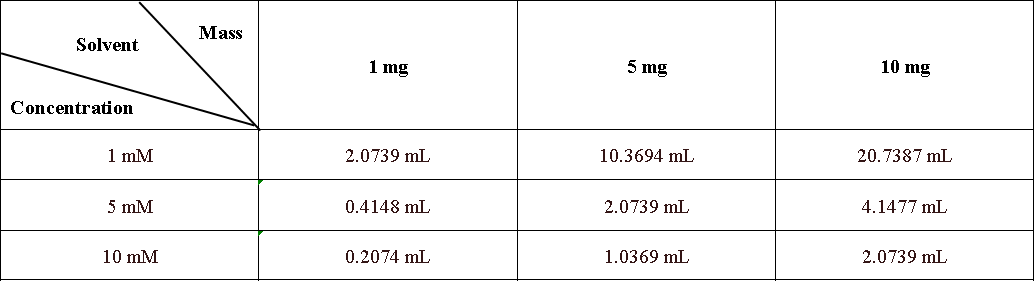
Please select an appropriate solvent to prepare the stock solution based on the product's solubility in different solvents. Once prepared, aliquot the solution for storage to avoid product failure caused by repeated freeze-thaw cycles. Storage conditions and shelf life: -80°C for 6 months; -20°C for 1 month (protect from light). When stored at -80°C, use within 6 months; when stored at -20°C, use within 1 month.
2. Animal Experiment
Please select an appropriate dissolution protocol based on your experimental animals and route of administration. For the following protocols, first prepare a clear stock solution following the in vitro method, then add cosolvents sequentially:
To ensure experimental reliability, the clear stock solution can be appropriately stored according to storage conditions. For in vivo working solutions, it is recommended to prepare them fresh and use on the same day. The percentage indicated before each solvent represents its volume ratio in the final solution. If precipitation occurs during preparation, heating and/or ultrasonication can be used to aid dissolution.
Protocol 1
Add solvents in order: 10% DMSO → 40% PEG300 → 5% Tween-80 → 45% saline
Solubility: ≥ 2.08 mg/mL (4.31 mM); Clear solution
This protocol yields a clear solution of ≥ 2.08 mg/mL (4.31 mM, saturation unknown).
Example for 1 mL working solution: Add 100 μL of 20.8 mg/mL clear DMSO stock solution to 400 μL PEG300 and mix well. Add 50 μL Tween-80 to the mixture and mix thoroughly. Then add 450 μL saline to bring the volume to 1 mL.
Protocol 2
Add solvents in order: 10% DMSO → 90% (20% SBE-β-CD in saline)
Solubility: ≥ 2.08 mg/mL (4.31 mM); Clear solution
This protocol yields a clear solution of ≥ 2.08 mg/mL (4.31 mM, saturation unknown).
Example for 1 mL working solution: Add 100 μL of 20.8 mg/mL clear DMSO stock solution to 900 μL of 20% SBE-β-CD in saline and mix well.
Protocol 3
Add solvents in order: 10% DMSO → 90% corn oil
Solubility: ≥ 2.08 mg/mL (4.31 mM); Clear solution
This protocol yields a clear solution of ≥ 2.08 mg/mL (4.31 mM, saturation unknown). This method is not suitable for experiments lasting longer than two weeks.
Example for 1 mL working solution: Add 100 μL of 20.8 mg/mL clear DMSO stock solution to 900 μL corn oil and mix well.
Pharmacodynamics
In a mouse model of NF1, oral dosing of mirdametinib inhibited ERK phosphorylation and reduced neurofibroma tumour volume and proliferation.
Mechanism Of Action
NF1 is caused by the loss-of-function variants in the NF1 tumour suppressor gene, which encodes neurofibromin: Neurofibromin loss in tumour cells leads to dysregulated Ras signalling with hyperactivation of downstream Ras effectors, including mitogen-activated protein kinase (MAPK, MEK) and its downstream effector extracellular signal–regulated protein kinase (ERK). As the MAPK pathway regulates cellular functions such as cellular growth and senescence, dysregulation of this pathway aberrant glioblastoma cell growth. Mirdametinib is a highly selective, non-competitive inhibitor of MEK1/2. In vitro, mirdametinib inhibited kinase activity of MEK1 and MEK2 and downstream phosphorylation of ERK.
Similar Products

Carboplatin
Therapy
: Oncology
Target
: DNA
CAS
: 41575-94-4
MF
: C6H12N2O4Pt
MW
: 371.25
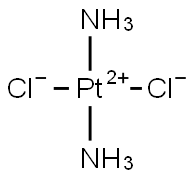
Cisplatin
Therapy
: Oncology
Target
: DNA
CAS
: 15663-27-1
MF
: Cl2H6N2Pt
MW
: 300.04

Oxaliplatin
Therapy
: Oncology
Target
: DNA
CAS
: 61825-94-3
MF
: C8H12N2O4Pt
MW
: 395.28
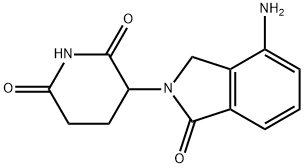
Lenalidomide
Therapy
: Oncology
Target
: CSNK1A1;IKZF1;IKZF3;CRBN
CAS
: 191732-72-6
MF
: C13H13N3O3
MW
: 259.261