
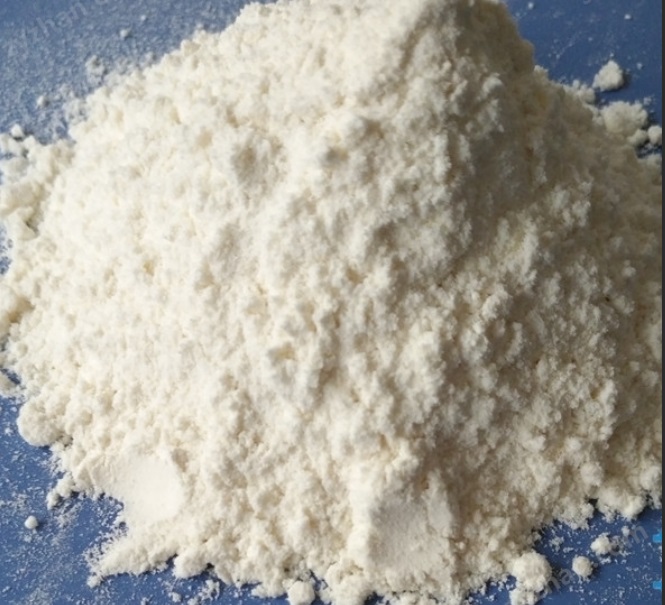
Vimseltinib
A highly selective colony-stimulating factor 1 receptor (CSF1R) inhibitor, a kinase inhibitor. It is indicated for the treatment of symptomatic tenosynovial giant cell tumors for which surgical resection is not appropriate.
Overview
Vimseltinib is a highly selective small molecule inhibitor of the colony-stimulating factor 1 receptor (CSF1R) with notable kinase selectivity. It acts by specifically inhibiting the CSF1R signaling pathway to modulate the tumor microenvironment, providing a treatment option for patients with symptomatic tenosynovial giant cell tumors where surgical intervention is not appropriate.
Synonyms: DCC-3014; Vimseltinib; CSF1R; CD117; CSF-1receptor; SCFR; inhibit; c-Fms; c-Kit; CSF-1R; Vimseltinib; DCC-3014(Vimseltinib); Vimseltinib(DCC-3014); Vimseltinib,10mM in DMSO; DP-6865; ROMVIMZA; colonystimulatingfactor1receptor; Inhibitor; 4(3H)-Pyrimidinone,3-methyl-2-[(1-methylethyl)amino]-5-[6-methyl-5-[[2-(1-methyl-1HChemicalbook-pyrazol-4-yl)-4-pyridinyl]oxy]-2-pyridinyl]-;2-(Isopropylamino)-3-methyl-5-(6-methyl-5-((2-(1-methyl-1H-pyrazol-4-yl)pyridin-4-yl)oxy)pyridin-2-yl)pyrimidin-4(3H)-one
Product Categories: BCRP/ABCG2 Inhibitors; BSEP/ABCB11 Inhibitors; Kinase Inhibitor; MATE 1 Inhibitors; MATE 2 Inhibitors; OATP1B1/SLCO1B1 Inhibitors; P-glycoprotein inhibitors; P-glycoprotein substrates
Mol File: 1628606-05-2.mol
Physicochemical Properties
Boiling point: 609.2±65.0°C
Density: 1.29±0.1 g/cm3
Solubility: DMF: 10 mg/mL; DMSO: 10 mg/mL; Ethanol: 10 mg/mL
Form: Solid
Color: Off-white to Light Yellow
MSDS Information
Experimental Data
1. Cell Experiment
DMSO : 50 mg/mL (115.88 mM; ultrasonic and warming and heat to 60°C)
Preparing Stock Solutions:
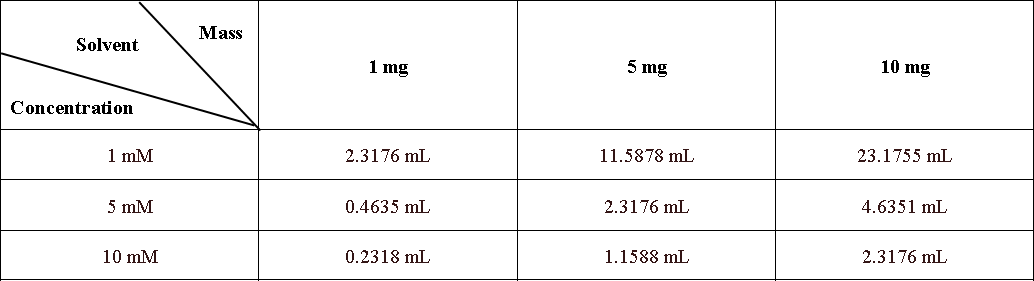
Please select an appropriate solvent for the preparation of stock solutions based on the solubility of the product in different solvents. Once prepared, the solution should be aliquoted and stored to avoid product failure caused by repeated freeze-thaw cycles. Storage methods and duration for stock solutions: -80°C, 6 months; -20°C, 1 month. When stored at -80°C, use within 6 months; when stored at -20°C, use within 1 month.
2. Animal Experiment
Please select an appropriate dissolution protocol based on your experimental animals and route of administration. For the following protocols, first prepare a clear stock solution following the in vitro method, then add cosolvents sequentially:
To ensure experimental reliability, the clear stock solution can be appropriately stored according to storage conditions. For in vivo working solutions, it is recommended to prepare them fresh and use on the same day. The percentage indicated before each solvent represents its volume ratio in the final solution. If precipitation occurs during preparation, heating and/or ultrasonication can be used to aid dissolution.
Protocol 1
Add solvents in order: 10% DMSO → 40% PEG300 → 5% Tween-80 → 45% saline
Solubility: ≥ 3.5 mg/mL (8.11 mM); Clear solution
This protocol yields a clear solution of ≥ 3.5 mg/mL (8.11 mM, saturation unknown).
Example for 1 mL working solution: Add 100 μL of 35.0 mg/mL clear DMSO stock solution to 400 μL PEG300 and mix well. Add 50 μL Tween-80 to the mixture and mix thoroughly. Then add 450 μL saline to bring the volume to 1 mL.
Protocol 2
Add solvents in order: 10% DMSO → 90% (20% SBE-β-CD in saline)
Solubility: ≥ 3.5 mg/mL (8.11 mM); Clear solution
This protocol yields a clear solution of ≥ 3.5 mg/mL (8.11 mM, saturation unknown).
Example for 1 mL working solution: Add 100 μL of 35.0 mg/mL clear DMSO stock solution to 900 μL of 20% SBE-β-CD in saline and mix well.
Protocol 3
Add solvents in order: 10% DMSO → 90% corn oil
Solubility: ≥ 3.5 mg/mL (8.11 mM); Clear solution
This protocol yields a clear solution of ≥ 3.5 mg/mL (8.11 mM, saturation unknown). This method is not suitable for experiments lasting longer than half a month.
Example for 1 mL working solution: Add 100 μL of 35.0 mg/mL clear DMSO stock solution to 900 μL corn oil and mix well.
Pharmacodynamics
Higher vimseltinib exposure is associated with an increased risk of adverse effects, including edema, rash, and increased liver enzymes. The exposure-response relationship for efficacy and time course of pharmacodynamic response have not been fully characterized.
Cases of severe liver toxicity have been observed in patients undergoing treatment with another CSF1R inhibitor, pexidartinib. This effect has not been observed in patients receiving vimseltinib, but patient liver function should be monitored regularly per prescribing information regardless.
Mechanism Of Action
Vimseltinib is a kinase inhibitor targeting colony-stimulating factor 1 receptor (CSF1R), a type III receptor tyrosine kinase which is crucial for survival, proliferation, and differentiation of myeloid lineage cells such as macrophages, microglial cells and osteoclasts. Abnormal CSF1R signaling has been observed in several diseases including cancer, arthritis, inflammatory disorders, Alzheimer’s Disease, and Parkinson’s Disease. Vimseltinib specifically acts by stabilizing CSF1R in its inactive state by exploiting its switch-control region, thereby inhibiting autophosphorylation, downstream signaling induced by CSF1 ligand binding, and proliferation of cells expressing CSF1R.
Similar Products
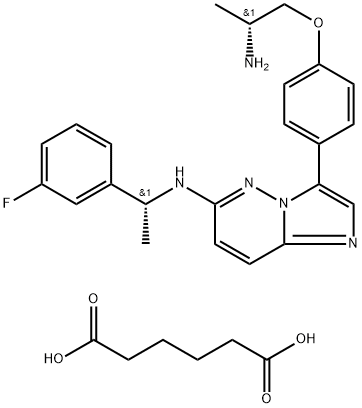
Taletrectinib
Therapy
: Oncology
Target
: ROS; Trk-A; Trk-B; Trk-C
CAS
: 1505515-69-4
MF
: C29H34FN5O5
MW
: 551.62
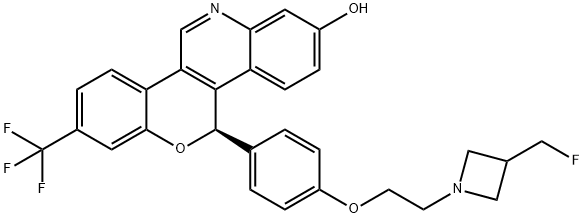
Imlunestrant
Therapy
: Oncology
Target
: ERs
CAS
: 2408840-26-4
MF
: C29H24F4N2O3
MW
: 524.51

Zongertinib
Therapy
: Oncology
Target
: HER2; HER2 exon 20 insert mutations
CAS
: 2728667-27-2
MF
: C29H29N9O2
MW
: 535.6
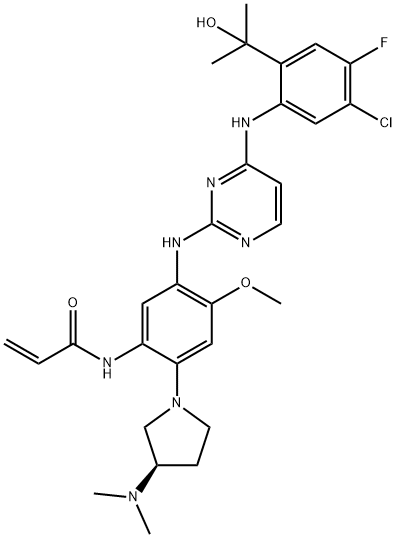
Sunvozertinib
Therapy
: Oncology
Target
: EGFR; HER2
CAS
: 2370013-12-8
MF
: C29H35ClFN7O3
MW
: 584.08